
Cactus leather is a plant-based artificial leather made from cactus (mainly succulent-leaved cactus) as the raw material. It is a vegan and sustainable leather alternative that represents the innovative direction of the fashion industry’s transition towards environmental protection.
In appearance and feel, cactus leather is very similar to traditional animal leather, with soft texture and certain durability, suitable for making bags, wallets, shoes and other fashion products. Currently, cactus leather has been applied in many sustainable brands.
This post will explore the characteristics of cactus leather and its advantages and disadvantages in the production of wallets.
What is Cactus?
Cacti (plural: cacti or cactuses) are a member of the Cactaceae family. Their characteristic is that their thick, fleshy stems are suitable for storing water, and spines or scales replace leaves to reduce water loss. Most cacti are native to arid regions, especially in the Americas, although some varieties have also been found in other parts of the world.
The Main Characteristics of Cactus:
Water storage
Their thick and juicy stems enable them to store water for a long time, which helps them survive in dry environments.
Leaves replaced by spines
Cacti have a modified type of leaves called spines. They reduce the exposed surface area to the sunlight and wind to minimize water loss. The spines also protect the animals from being attacked by herbivores.
Shallow and wide roots
The root systems of many cacti are shallow, allowing them to spread widely to quickly absorb rainwater. Some cacti have deep main roots that can absorb underground water.
Convex photosynthesis
Cacti use a special form of photosynthesis called Crassulacean Acid Metabolism (CAM), which enables them to open their stomata (pores) at night to reduce water loss while still generating energy.
Flowers and fruits
Despite their hard appearance, many cacti usually bloom large and colorful flowers at night to attract pollinators such as bats and moths. Some varieties also produce edible fruits (for example, prickly pear).
Summary of Feature
| Feature | Description |
| Habitat | Deserts, rocky areas, and dry forests |
| Special Ability | They use a process called CAM photosynthesis, opening their pores only at night to save water, making them great “oxygen producers” indoors during the evening. |
| Distribution | Native almost exclusively to the New World (Americas). |
| Stem Structure | Thick, fleshy, and green, performing photosynthesis (leaves are reduced or absent) |
| Spines | Sharp structures growing from specialized areas called “areoles” |
| Water Storage | Stems contain specialized tissue for storing water, allowing survival in dry conditions |
| Flowers | Typically large and showy, often yellow, red, or purple |
| Fruits | Usually berry-like (e.g., “cactus pear”), often edible |
Common Types of Cactus
- Carnegiea gigantea: The iconic tall cactus of the Sonoran Desert.
- Cactus (Cactaceae): Known for its flat paddle-shaped stems and edible fruits.
- Ferocactus spp: Round and ridged, usually with bright flowers.
- Selenicereus: A popular indoor plant that blooms in winter.
The Uses of Cactus
- Medicinal value: In traditional medicine (such as in China and Mexico), succulent plants have been used to treat various conditions ranging from inflammation and swelling to digestive problems. The extracts from succulent plants are also used in modern cosmetics due to their moisturizing properties.
- Food source: Several varieties of succulent plants bear edible fruits (often called “prickly pears”), which are sweet and nutritious. In some regions, the tender stems are cooked and eaten as vegetables.
- Decoration and landscape: Due to their unique shapes and beautiful, vibrant flowers, they are popular in rock gardens and potted plants.
What is Cactus Leather?
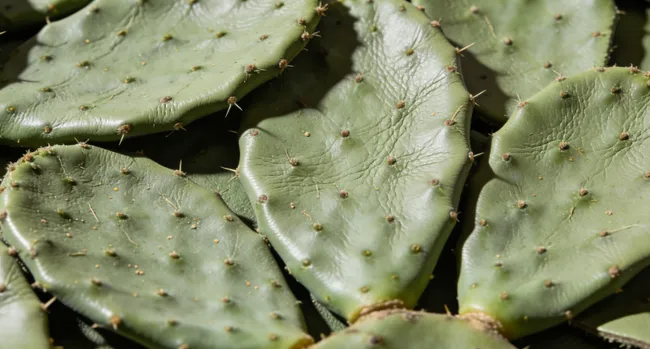
Cactus leather is a plant-based leather substitute made from the leaves of cacti, particularly the Nopal cactus of the Opuntia genus. Through a sustainable processing method, these cactus leaves are transformed into a material that has a texture, durability, and appearance similar to traditional leather, while also featuring environmental friendliness, animal friendliness, and efficient resource utilization.
The Core Features and Advantages of Cactus Leather
Sustainability
- Water-saving and efficient: Cacti are adapted to arid environments and do not require extensive irrigation during their growth process. They can survive solely on natural precipitation, significantly reducing water consumption.
- Fast regeneration: After the leaves of cacti mature, they can be harvested every 6-8 months, and the plants can continue to grow after harvesting without the need for replanting, achieving long-term resource utilization.
- Low carbon footprint: The production process has lower carbon emissions. Some brands (such as Desserto) of cactus farms can even absorb carbon dioxide, contributing to the goal of carbon neutrality.
Environmentally friendly and animal-friendly
- No animal ingredients: Completely avoids the animal breeding, slaughtering, and chemical tanning processes in traditional leather production, reducing harm to animals and the environment.
- Low chemical pollution: Compared to synthetic leather (such as PU, PVC) which rely on petrochemical raw materials and toxic additives, cactus leather uses natural components, reducing harmful substance emissions.
Superior Performance
- Realistic texture: Through special processing, the softness, elasticity, and texture of cactus leather can rival genuine leather, suitable for high-end fashion and home design.
- High durability: Possesses anti-tear, wear-resistant, and waterproof properties, extending the lifespan of products.
- Excellent breathability: Compared to some synthetic leather, cactus leather has better breathability, enhancing wearing comfort.
Multifunctional Applications
- Fashion field: Used for making handbags, wallets, shoes, clothing, etc., meeting consumers’ demands for sustainable fashion.
- Home decoration: Covers sofas, seats, cushions, etc., adding natural texture to indoor spaces.
- Automotive interior: Some automotive brands (such as Mercedes) have explored using it for seats, steering wheels, etc., promoting green transportation.
- Technology accessories: Producing phone cases, laptop computer covers, etc., balancing environmental protection and technological appeal.
Summary of The Key Benefits of Cactus Leather
| Feature | Benefit |
| Eco-Friendly | Grows with rainwater only—no irrigation needed; absorbs CO₂ during growth. |
| Biodegradable | Partially biodegradable (depending on coatings); far more eco-friendly than petroleum-based faux leather. |
| Cruelty-Free | No animals harmed—ideal for vegan fashion. |
| Durable & Flexible | Soft, breathable, and comparable in quality to high-end animal leather. |
| Low Water Use | Requires significantly less water than cotton or livestock farming. |
Environmental Benefit Data
- Water resources: Producing 1 square meter of cactus leather requires only approximately 200 liters of water, significantly less than traditional cowhide (about 15,000 liters).
- Carbon emissions: The cactus farm of Desserto can absorb 8,100 tons of carbon dioxide annually, achieving carbon negative emissions.
- Chemical pollution: Compared to the tanning process of animal leather, the production of cactus leather reduces the use of chemical substances by more than 90%.
The Challenges of Cactus Leather
- Not 100% natural: To achieve durability, it still needs to be mixed with adhesives such as biobased plastics.
- High cost: As an emerging material, its current production cost is higher than that of some synthetic leathers and traditional leather.
- Limited durability: In terms of extreme wear resistance and tear resistance, it still lags behind top animal leather.
- Moisture Sensitivity: Exposure to heavy rain or high humidity for a long time can cause it to harden (this can be avoided by proper storage).
Brand Case of Cactus Leather
- Desserto: A Mexican brand, the world’s first commercial manufacturer of cactus leather, collaborating with H&M, Fossil, Karl Lagerfeld, etc., to promote sustainable fashion.
- Mercedes-Benz: Applying cactus leather interior to concept electric vehicles, exploring green automotive materials.
- Rahui London: Emphasizing the soft touch and high-end texture of cactus leather, suitable for the fields of fashion and home decoration.
- Gunas New York: Using cactus leather in handbags, shoes, etc., integrating environmental protection and aesthetics.
Practical Purchase Tips
- Certification Mark: When purchasing, pay attention to whether the cactus leather products have clear environmental certification marks.
- Price Expectation: Cactus leather products are usually cheaper than traditional leather, but slightly more expensive than ordinary synthetic leather.
- Maintenance Method: Avoid contact with chemical solvents. You can gently wipe with a soft cloth. It is waterproof but not suitable for prolonged soaking.
- Brand Selection: Confirm the reputable brands like Desserto. Avoid purchasing products that claim to be “cactus leather” but have unclear ingredients.
- Environmental Awareness: Choosing such products is a support for sustainable development. However, one should also view its limitations rationally.
Is Cactus Leather Biodegradable?
Yes, cactus leather is partially biodegradable, but not completely so. This depends on how it is manufactured.
Whether cactus leather can be biodegradable depends on the specific product. Currently, the mainstream products on the market cannot fully biodegrade in the natural environment. To make an accurate judgment, you need to pay attention to its specific components.
Overall, it is more easily degradable than traditional animal leather and synthetic leather (such as PU, PVC), and this is one of its core advantages as an environmentally friendly material.
Biodegradable Components
Cactus fiber base (made from cactus pulp) is natural and biodegradable.
If processed with natural adhesives, dyes, and coatings, a large portion of this material can decompose under appropriate composting conditions.
Most sustainable brands use plant-based adhesives such as corn starch, natural resins, or soy-based adhesives to bond the cactus fibers together. These finished materials will completely decompose in compost or soil within 6 to 12 months without leaving toxic residues. They usually hold certifications such as OK Compost to confirm their ultimate lifespan in the recycling process.
Non-biodegradable Additives
Some lower-priced cactus leather products contain small amounts of synthetic materials, such as:
- Polyurethane (PU) or other polymers (typically accounting for 10% – 30%)
- Plastic-based coatings for waterproofing, durability or texture
In this case, the cactus fibers will decompose, but these synthetic layers are not biodegradable and may remain in the environment like traditional plastics.
Comparison with Other Materials
| Material | Biodegradable? | Notes |
| Animal leather | Yes (but slowly; ~50+ years) | Tanned with chemicals that slow decomposition |
| PU/PVC faux leather | No | Petroleum-based plastic; persists for centuries |
| Standard cactus leather | Partially | Natural base + synthetic coating |
| Future bio-based cactus leather | Potentially yes | R&D ongoing for 100% plant-based binders |
Is Cactus Leather Good for Making Wallets?
Yes, cactus leather can be used to make wallets, and it offers a good texture and an environmentally friendly image. But whether it is “very good” depends on your core requirements for the wallet – whether it is about being fashionable and environmentally friendly, or about being extremely durable.
Why is Cactus Leather Suitable for Making Bags?
Sustainable and Environmentally Friendly
It is made from cactus – a drought-resistant plant that requires very little water and does not need pesticides.
Compared to traditional leather, its carbon footprint is lower and its impact on the environment is smaller.
It is vegan and cruelty-free, suitable for consumers who pursue ethical fashion choices.
Durable and Practical
A sturdy, tear-resistant and wear-resistant material that can withstand daily use – suitable for handbags, large tote bags, backpacks and crossbody bags.
It has excellent resistance to wear and tear and abrasion, and its performance is often better than that of ordinary synthetic leather.
Its natural water resistance and breathability make it suitable for daily carrying.
Aesthetic Diversity
It can be processed and dyed to imitate the texture and color of real leather, usually presenting a fashionable appearance that many brands and designers appreciate.
Limitations of Baking Bags with Cactus Leather
Comparison of Durability with Traditional Leather
Although cactus leather used for making purses has good durability and can be used for several years, in general, it is usually not as durable as high-quality animal leather, which can last for decades if properly maintained.
Variety of Components
Some products mix cactus leather materials with adhesives (usually biobased polyurethane) to enhance durability. This is highly effective in increasing strength, but it may have an impact on aspects such as biodegradability and the actual “plant components”.
Price and Supply Situation
Because this is a relatively new and niche material, bags made with cactus leather are usually more expensive and the supply is also less than that of traditional leather or common faux-plant leathers (such as polyurethane).
Not Completely Waterproof
Most bags made with cactus leather can well resist light rain and splashes, but without additional treatment, they cannot be completely waterproof.
Summary of the Advantages and Disadvantages of Making Wallets with Cactus Leather
| Pros (For Wallets) | Cons (For Wallets) |
| 1. Texture & Appearance: Soft, feels similar to genuine leather, fashionable look. | 1. Insufficient Durability: Authoritative research indicates its tear resistance is 8.5 times lower than genuine leather, a significant drawback for wallets that are frequently bent and rubbed. |
| 2. Lightweight & Practical: Usually lighter than genuine leather. | 2. Long-Term Use Issues: Often blended with materials like polyurethane to enhance performance, which may lead to cracking or peeling over extended use, similar to other synthetic leathers. |
| 3. Eco-Friendliness & Story: The production process is relatively water-efficient and low-carbon, aligns with vegan principles, and provides a unique environmental value proposition. | 3. High Cost: As an emerging material, it is often more expensive than ordinary synthetic leather, sometimes nearing the price of mid-range genuine leather. |
| 4. Easy Care: Offers some water and scratch resistance, easier daily maintenance than genuine leather. | 4. Inconsistent Performance: Formulas vary greatly between brands, leading to inconsistent performance and quality stability. |
Notable Cactus Leather Bag Brands
| Brand Name | Region/Country | Introduction & Bag Features |
| SENREVE | San Francisco, USA | A fashionable niche brand that has launched styles like the “Cornetti Bag” made from Desserto cactus leather, focusing on style and functionality in its designs. |
| Ganni x Ohoskin | Denmark (Collaboration) | The Bou Bag launched by Danish fashion brand Ganni in collaboration with Italian material supplier Ohoskin. The material is derived from cactus and orange waste, and the brand claims it can last 10-20 years. |
| ASK Scandinavia | Finland | Its Willow tote bag was featured in Vogue US for using Desserto cactus leather. The design is minimalist, and the material’s texture is close to that of traditional leather. |
| Allégorie | New York, USA | A female-founded brand focused on transforming food byproducts into bags. Their product line includes bags made from cactus leather, adhering to small-batch local production. |
Is Cactus Leather Wallet Expensive?
Yes, the price of the cactus leather wallet is relatively reasonable – not “cheap”, but not luxurious either. Cactus leather wallets (especially those from mainstream brands and made with genuine materials) usually cost more than budget synthetic leather wallets, but may be lower or close to mid-to-high-end traditional leather wallets. The exact price depends on the authenticity of the material and the brand positioning.
Key Factors Influencing the Price
The price of the cactus leather wallet is mainly determined by the following factors:
- Material authenticity: Brands that use genuine patented materials such as Desserto® have higher prices due to higher research and production costs. Products with extremely low prices may only contain a small amount of plant ingredients or be merely synthetic leather with “cactus patterns”.
- Durability and quality: Many cactus leather wallets claim to be durable and long-lasting products. Since the cactus leather material itself is already quite durable (though not as durable as high-end animal leather), some brands price the wallets as investment items with long-term use value.
- Brand and positioning: Well-known fashion brands or eco-friendly designer brands have higher brand premiums in their pricing.
- Craftsmanship and design: Handmade and complexly designed products have higher prices.
Price Comparison: Cactus Leather vs. Alternatives
| Material | Price Range | Key Notes |
| Basic PU Wallets | $10–$40 | Mass-produced, non-biodegradable, shorter lifespan (1–2 years) |
| Mid-Range Cactus Leather | $45–$100 | Desserto-certified, bio-based binders, 5–8 year lifespan |
| Mid-Range Animal Leather | $50–$120 | Cowhide, chrome-tanned, requires more water/chemicals |
| Premium Cactus Leather | $100–$200+ | Luxury brands, handmade, full biodegradability, unique designs |
| High-End Luxury Leather | $200–$500+ | Designer labels (e.g., Louis Vuitton), exotic leathers |
Is the Price Reasonable?
Although the price is higher, the cactus leather wallet still has long-term value for use:
- Durability: The lifespan can reach 5 to 8 years, comparable to that of medium-priced animal leather.
- Environmental friendliness: It is biodegradable. It uses a bio-based adhesive (which takes 6 to 12 months in a compost environment) instead of polyurethane (which is non-biodegradable) and animal leather (which takes several decades to decompose).
- Ethicality: 100% vegan, without cruelty, and uses 80% less water than traditional leather production.
Is It Worth The Price?
This depends on your personal preferences and what you value:
- Environmentally conscious consumers would consider this price reasonable because it has many environmental advantages, such as lower water consumption and the use of sustainable procurement methods.
- Fashion-conscious consumers might be attracted by the unique appearance and texture of cactus leather.
- Those seeking durability: Although its durability is not as good as that of high-end animal leather, cactus leather is durable enough to meet daily usage needs. A mid-range wallet can still provide you with several years of good usage experience.
Typical Price Range (as of 2025–2026)
| Type of Wallet | Approximate Price Range |
| Mass-market PU/faux leather | $ 10– 30 |
| Cactus leather wallet | $ 45– 150 |
| Mid-tier genuine leather (e.g., Coach, Fossil) | $ 80– 250 |
| Luxury leather (e.g., LV, Hermès) | $ 500+ |
| Angela Roi | Cactus Leather Minimalist Wallet |
| Nae Vegan | Cactus & Recycled Fabric Bifold |
Market Trend
With technological advancements and large-scale production, the price of cactus leather wallets is expected to gradually decrease. It is anticipated that by 2027, as environmental awareness increases and production technologies mature, the price will become more affordable and the market share will rise. Currently, choosing a cactus leather wallet is not just about purchasing a product, but also an investment in sustainable development concepts.
Where to Custom Cactus Leather Wallets?
If you want to customize a large quantity of cactus leather wallets, there are several factories and platforms on the market that offer customization services. These manufacturers allow you to choose the style, color, and even add personalized engravings.
Cactus Leather Product Manufacturer
Cactus Leather Bag Store
- Customization options: A wide range of cactus leather products are available, including wallets. Here you can customize the color, size, and some features.
- Additional services: You can collaborate with them to create a completely personalized design (for example, engraving the initials of your name or choosing a specific size).
GIONAR: Leather Goods Manufacturer
- Customization options: GIONAR offer a range of customized services for leather products. The types of leather include animal leather, plant leather, synthetic leather, etc. The product types include handbags, backpacks, wallets, etc.
- Additional services: Personalized engraving, embroidery, and even design adjustments can be provided according to your needs. The prices vary depending on the complexity and the skill level of the artisans.
Customized Operation Process
- Select wallet type: You can choose from cardholder wallets, double-fold wallets, slender wallets, and even more complex styles (such as zipped wallets or passport holders).
- Pick your color and style: Many manufacturers allow you to choose the color of cactus leather, and some manufacturers also offer different textures or surface treatment options.
- Add personalized elements: You can choose engraving or embossing (for example, initials, names, custom patterns) or even modify the internal layout of the wallet.
- Choose functions: Some services allow you to modify details such as internal compartments (such as sections for storing cards, cash and coins) and thread colors.
Key Considerations for Custom Cactus Leather Wallets
| Factor | What to Look For | Why It Matters |
| Material Authenticity | Desserto® certification, 45%+ cactus content, bio-based binders | Ensures full biodegradability and sustainability |
| Customization Type | Laser engraving (permanent), hand-stamping (artisanal), embroidery (cultural) | Affects durability and aesthetic appeal |
| Production Time | 7–14 days (artisan), 2–3 weeks (made-to-order), 4–6 weeks (bulk) | Plan accordingly for gifts or events |
| Price vs. Quality | $45+ for authentic custom cactus leather (avoid cheaper options with synthetic blends) | Ensures longevity (5–8 years) and eco-friendliness |
| Sustainability Credentials | PETA-approved vegan, OEKO-TEX certified, fair-trade production | Aligns with ethical consumer values |
Practical Tips for Creating a Perfectly Customized Wallet
- Provide detailed specifications: including precise text content, font size, color codes, and the location of engraving/embroidery.
- Request a sample: Most artisans will create a small sample of your design before formal production.
- Check the return policy: Ensure that you can return the customized wallet that does not meet your expectations.
- Consider RFID protection feature: Add this feature to your customized design to enhance security.
Conclusion
Cactus leather is a renewable, low-impact and vegan-friendly innovative material that opens up a promising path towards more ethical and environmentally friendly fashion and design – proving that sustainability can be both fashionable and practical.
Although the cost of cactus leather is usually higher, its environmental attributes and unique texture have gradually gained recognition in the modern market, especially among consumers who support animal rights and pursue sustainable lifestyles.
If you are running your own leather bag business and want to customize a batch of cactus leather wallets, please feel free to contact us.