
Mango leather is an innovative and eco-friendly material, featuring sustainability and unique aesthetics. It is soft and lightweight, making it suitable for making small accessories such as wallets and clutch bags, meeting the dual demands of vegan consumers for ethics and environmental protection.
Mango leather is a highly promising sustainable material and is very suitable for consumers with a strong sense of environmental protection. If your bag brand is positioned for this group of users who pursue fashion, lightness and unique style, then you can try using mango leather as a material to make bags.
This post will explore the characteristics of mango leather, as well as the advantages, disadvantages and quality of making bags.
What is mango leather?
Mango leather is an innovative, eco-friendly and sustainable material based on plants. This material is made by processing mango waste (a fruit that would otherwise be discarded) into durable, leather-like thin sheets. It is used in fashion and accessories as an alternative to animal leather or synthetic (plastic-based) artificial leather.
The origin and background of mango leather
Mango Leather was successfully developed by the Dutch start-up Fruitleather in 2015. The founders, Hugo de Boon and Koen Meerkerk, are graduates of the Interior design program at Willem de Kooning academy in Rotterdam. They began to pay attention to the circular economy during their college years and discovered through experiments that the fibers in discarded mangoes could be made into materials similar to leather.
As the largest mango trading center in Europe, the Netherlands imports approximately 6 million kilograms of mangoes each year, accounting for more than half of the total imports in Europe. Due to logistics or storage issues, approximately 1,500 mangoes are discarded every week. These mangoes cannot be sold at low prices because of the strict food safety standards of the European Union and can only be treated as garbage.
Key features of mango leather
Sustainable materials
Reusing mango waste that would otherwise be discarded (such as overripe, damaged or unsold fruits) can reduce food waste and promote a circular economy.
Avoid environmental hazards associated with traditional leather production, such as deforestation, water pollution and greenhouse gas emissions from livestock breeding.
Vegetarians and cruelty-free
It contains no animal-derived ingredients, making it suitable for vegetarians and those seeking ethical alternatives.
Physical properties
- Texture: Soft, elastic, leather-like, and the texture can imitate traditional leather. Depending on the production method, some variants may be slightly chewy or soft.
- Durability: Generally not as durable as genuine leather, but suitable for making fashionable items such as handbags, shoes and accessories. Some formulas may contain natural additives to enhance strength.
- Appearance: Deep orange or brown, often retaining the unique aroma of mangoes.
Biodegradability
Partially degradable, but the rate depends on the specific adhesive used. Some versions aim to be completely biodegradable in order to minimize the impact on the environment.
Common uses:
- Fashion accessories: handbags, wallets, belts
- Footwear: Shoes (Under development/improvement)
- Household goods: Interior decoration, furniture decoration
- Laptop bags, small leather goods
The benefits of mango leather
- Sustainability: Reusing agricultural waste, otherwise it will lead to landfill or methane emissions.
- Low environmental impact: In addition to the existing mango cultivation, no additional land, water or pesticides are required.
- Vegetarians and cruelty-free: No use or harm to animals.
- Biodegradable (partially): It can decompose naturally without synthetic additives – although many current versions are only partially biodegradable.
- Unique aesthetic: Usually with soft, slight texture, warm and simple tones.
The limitations of mango leather
- Durability: Generally not as durable as high-quality animal leather. It is most suitable for light items such as wallets, small bags, phone cases or fashionable accessories.
- Water resistance: Limited, unless coated (which may reduce biodegradability).
- Availability: It remains a niche material and has not yet been mass-produced.
- Performance consistency: The quality of mangoes varies depending on the variety, season and processing method.
Market development and future prospects
- Price: The mango leather produced by Fruitleather is priced between 49.99 and 60 euros per sheet. The 56×38 cm size is priced at 49.99 euros, and the 60×40 cm size is priced at 60 euros.
- Cooperation case: In 2019, collaborated with the interior design STUDIO STUDIO VERBAAN to launch mango leather lamps; In 2021, it collaborated with the Spanish footwear brand SAYE to launch casual shoes.
- Market positioning: The founder stated that Fruitleather’s goal is not to replace traditional leather, but to provide the industry with “an additional alternative” to meet the demands of eco-friendly consumers.
How to make mango leather?
Mango leather is a sustainable vegan material made from discarded mango peels, pulp and overripe fruits, transforming agricultural waste into leather-like textiles. The following are the detailed steps for industrial-scale production (for commercial use), broken down step by step.
Industrial-scale mango leather production
Industrial processes prioritize durability, scalability and consistent quality, such as brands like Fruitleather Rotterdam and Aamati Green.
1. Collection and preparation of raw materials
- Source: Collect discarded mangoes (overripe, damaged or refused for retail) from farms, markets or food processing facilities. Focus on choosing mango varieties with thick skins and high flesh content (such as Keitt, Palmer, and Alphonso).
- Sorting and cleaning: Remove stones, stems and non-mango fragments. Thoroughly clean to remove dirt, pesticides or bacteria.
- Peeling and pulping: Separate the skin from the pulp (use both!)” Use an industrial mixer to blend the peels and pulp into a smooth puree. To maintain consistency, filter out the fiber lumps from the mud (optional, depending on the desired texture).
2. Substrate formula
Enhance durability and flexibility (crucial for leather-like performance) :
- Mix the mango puree (60-70%) with a natural binder
- Biopolymers (such as corn starch, cassava starch or cellulose) -20-30% (improve structural integrity).
- Natural plasticizers (such as glycerin, coconut oil) -5-10% (to prevent brittleness).
- Optional additives: vinegar (preservative), plant dye (for coloring), or beeswax (for initial waterproofing).
Stir vigorously to form a uniform paste (without lumps, lumps will cause uneven drying and weak points).
3. Forming and diffusion
Use a spreader or doctor’s blade to evenly apply the paste onto non-stick trays or conveyor belts. The target is a thickness of 1-2mm (thicker = stronger, but longer drying time; thinner = more flexible, but more prone to tearing).
For textured finishes (imitating animal leather), press a pattern mold onto the wet paste or use an embossing roller after spreading.
4. Drying (Key Step)
- Initial dehydration: Place the tray in an industrial dehydrator or a low-temperature oven (40-50°C) for 16-24 hours. This way, most of the water can be removed without cooking the mangoes (high temperatures will damage the natural fibers and reduce their durability).
- Air-drying: Transfer the partially dried bed sheets to a well-ventilated and cool place for 5 to 7 days. Slow air drying causes the fibers to naturally cross-link, enhancing flexibility and strength.
- Moisture inspection: When the material is dry to the touch, light in weight and not bent, visible moisture (target moisture content: 8-10%).
5. Sorting and processing
Trimming: Cut off uneven edges or blemishes from dry bed sheets.
Surface treatment
- Use plant-based protective coatings (such as natural resins, carnauba wax or bio-based polyurethane) to enhance water resistance and scratch resistance.
- Sand the surface with fine sandpaper to make it smooth, like leather (optional).
- Embed or cover the trademark/pattern (for the brand) while the coating is still a little sticky.
Quality control: Test tensile strength (tear resistance when stretched), flexibility (no cracking when bent), and water resistance (light splash). Refuse boards with molds, holes or fragility.
6. Storage and cutting
Store the completed mango leather in a dry and cool place (avoid dampness – mold is prone to grow). Roll the paper instead of folding it to prevent creases.
Cut patterns into bags, wallets or accessories with industrial tools.
The production principle and background of mango leather
Mango leather is an eco-friendly material developed by the Dutch start-up company Fruitleather. Its core principle is to use the fibers in discarded mangoes (i.e., the filamentous substances remaining on the mango pits) to create a leather-like material. These fibers are flexible and elastic, with properties very similar to those of animal leather. Through processing, they can be made into vegan materials with a texture close to that of real leather.
Practical tips for making mango leather
- Raw material selection: Choose mango varieties with high fiber content, such as Alphonso, Kesar, Banganapalli, etc.
- Thickness control: When spreading mango puree, it should be spread as evenly as possible. If it is too thick, it will affect the drying effect; if it is too thin, it may affect the strength of the finished product.
- Drying temperature: It is recommended to use low-temperature slow baking (65-80℃), as this will make the finished product more stable and prevent it from becoming brittle due to high temperatures.
- Environmental considerations: The entire production process should minimize the use of chemical substances to maintain the environmental friendliness of the materials.
Is mango leather good for making bag?
Yes, mango leather is an excellent, feasible and environmentally friendly material choice for handbag making, suitable for creating fashionable everyday bags, especially for casual and low to medium usage styles.
Industrially made mango leather (such as products made from upcycled fruit waste) is strong enough to be used to make small handbags, wallets, card holders and lightweight accessories, rather than heavy-duty ones.
The advantages of making bags with mango leather
Sustainability
- Reduce waste: Mango leather is made from discarded fruits (such as overripe, damaged or unsold mangoes), shifting food waste away from landfills and promoting a circular economy.
- Environmentally friendly production: Unlike traditional leather, it avoids the use of toxic chemicals (such as chromium used in the tanning process) and reduces greenhouse gas emissions from the livestock industry.
- Biodegradability: Many formulas are partially or completely biodegradable, minimizing the long-term impact on the environment.
Moral attraction
- Vegetarian and cruelty-free: Free of animal-derived ingredients, it is an ideal choice for vegetarians and those seeking moral alternatives.
- Transparency: Some brands (such as Fruitleather Rotterdam, SAYE) openly share their production processes, enhancing consumer trust.
Unique aesthetic
- Natural look and feel: Mango leather usually retains a deep orange or brown tone and a subtle mango aroma, adding a unique organic touch to the design.
- Texture variability: Depending on the production method, it can imitate the texture of traditional leather or offer a softer and more flexible surface.
Lightweight and flexible
Mango leather is usually lighter than genuine leather, making them comfortable for daily use in bags, wallets, or small accessories.
The limitations of mango leather bags
Durability
- Wear and tear: Mango leather is not as durable as genuine leather, especially when used frequently. It may be more prone to scratches, tears or deformations, thereby limiting its service life.
- Water resistance: Without additional treatment (such as wax coating), it may absorb moisture, leading to staining or weakening. Some brands address this issue by blending mango pulp with synthetic polymers such as bio-based PU to enhance strength.
Cost and scalability
- Production challenge: Expanding mango leather production to meet commercial demand remains difficult as it relies on a continuous supply of waste fruits and an energy-intensive drying process.
- Higher price point: Due to limited availability and niche manufacturing, mango leather bags may be more expensive than traditional vegetarian alternatives such as artificial leather.
Texture and thickness
- Uniformity: Due to the fact that the fiber content and moisture content of the pulp may vary, achieving a consistent texture over large areas of fruit can be quite challenging.
- Thickness limitation: Mango leather is usually thinner than genuine leather, which may affect their suitability for structural bags that require rigidity.
When should one choose a mango leather bag?
- Environmentally conscious consumers: If you prioritize sustainability and the lifespan of ethical production, mango leather is a great choice.
- Lightweight accessories: They are suitable for small bags, handbags or decorative elements, and durability is not very important.
- Unique design declaration: The natural color and texture of mango leather can add a one-of-a-kind beauty to avant-garde and fashionable works.
When to consider alternative solutions
- Heavy-duty use: For bags that need to withstand frequent use, rough handling or exposure to moisture, traditional leather or high-quality artificial leather (such as cork, Pinatex) may be more practical.
- Budget constraints: If cost is the main factor, mango leather may not be the most economical choice yet.
- Structural design: Bags that require rigid shapes (such as briefcases and handbags) may benefit from thicker and more stable materials.
Compare with other materials
| Feature | Vegan Mango Leather | Traditional Animal Leather | Synthetic/PU Leather |
| Core Material | Processed mango waste (sustainable) | Animal hide (resource-intensive) | Polyurethane/PVC (plastic-based) |
| Durability | Good, but generally less hard-wearing than top-grain leather. Can be prone to scratches if uncoated. | Very high, develops a patina over time. | Varies; can peel or crack with heavy use. |
| Water Resistance | Usually has a water-resistant coating, but not inherently waterproof. Prolonged moisture can damage it. | Naturally water-resistant if treated, but can stain. | Often highly water-resistant. |
| Texture & Look | Unique, often with a slightly pebbled or grainy texture. Can be embossed. Color consistency may vary. | Classic, luxurious look. Natural grain. | Very uniform appearance. Can mimic any texture. |
| Environmental Impact | Very low. Upcycles food industry waste, biodegradable components. | High (land use, water, chemicals in tanning). | Very high (fossil fuels, non-biodegradable). |
| Care & Maintenance | Wipe with damp cloth. Avoid harsh chemicals. May require special conditioners. | Requires regular conditioning. | Easy to wipe clean. |
| Cost | Premium, similar to or higher than mid-range leather due to innovative process. | Wide range, from affordable to luxury. | Generally the most affordable. |
The future development trend of mango leather bags
- Technical improvements: With technological advancements, the durability and water resistance of mango leather are expected to be further enhanced, making it more suitable for manufacturing high-end bags.
- Market expansion: Currently, mango leather is mainly used in the European market. In the future, it is expected to expand to the global market, including Asian countries such as China.
- Diversified design: Mango leather can be made into products of different colors and textures. In the future, there will be more design innovations to meet the aesthetic needs of different consumers.
- Circular economy: The mango leather industry will promote the development of a circular economy, enabling the full utilization of waste fruit resources and reducing environmental pollution.
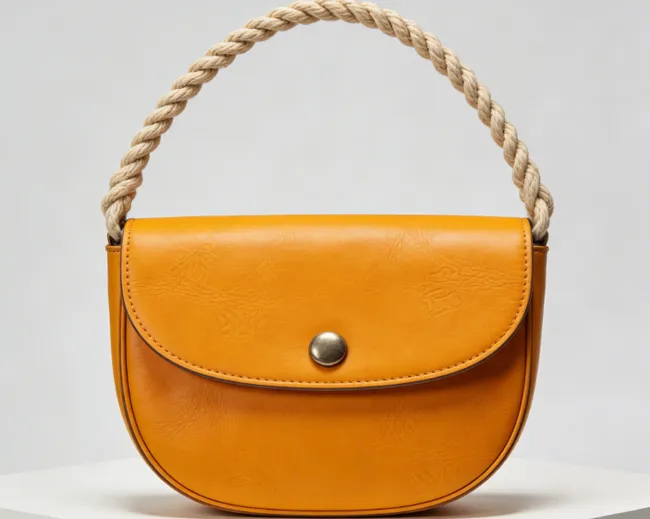
Are mango leather bags good quality?
Mango leather bags are an innovative and eco-friendly choice, featuring a unique look and feel. However, compared with traditional materials, there is some compromise in their quality.
The quality of mango leather bags varies greatly due to differences in manufacturing techniques and brands. Their core advantage lies in environmental friendliness, but durability, cost and production scale are the main limiting factors.
Analysis of quality indicators of mango leather bags
1. Durability
- Suitable for light to moderate use: With proper care, it can be used for 3 to 5 years (high-quality animal leather can last for several decades)
- Not suitable for heavy-duty applications: It cannot match the tensile strength or lifespan of traditional leather
- Structural limitation: Thinner plates (1-2mm) are prone to tearing under stress. Recommended to reinforce the suture
- Improvement: The new formula using reinforced adhesives has enhanced durability
2. Water resistance (main limitation)
- Poor natural stress resistance: Quick moisture absorption, leading to warping and staining
- Surface treatment is helpful, but it doesn’t solve the problem: Commercial mango leather usually has a protective coating (beeswax, plant-based resin) to improve water resistance, but it can still only withstand slight splashes
- It is not recommended for use in rainy climates: it is prone to mold in damp environments
3. Aesthetic and tactile qualities
- Natural and unique appearance: Subtle color variations (amber, brown, orange) and textures that imitate handcrafted leather
- Soft feeling: Imitates the flexibility of genuine leather while being slightly lighter
- A faint mango fragrance: It adds an organic sensory element that fades over time
- Customizable: It can be dyed, embossed, or textured to match design preferences
4. Craftsmanship & Construction
- Quality varies by brand: Artisanal producers (such as Fruitleather Rotterdam) prioritize fine processing, while cheaper versions may have inconsistent thickness or poor edge processing
- Hardware issues: High-quality metal components (zippers, buckles) significantly enhance durability and perceived quality
- Lining is indispensable: internal fabric reinforcement enhances the integrity of the structure, especially in load-bearing areas
Ideal use case (where quality stands out)
- Casual tote bags and shoulder bags: Their lightweight design and unique appearance make them perfect daily necessities
- Wallets and handbags: Smaller sizes minimize wear and tear while showcasing the aesthetic appeal of the material
- Eco-friendly fashion accessories: In line with sustainable brand values and cruelty-free principles
- Handmade/craft market products: Natural defects are part of the material properties
Not recommended for use (insufficient quality)
- Outdoor/multi-functional bags: Lacking water resistance and wear resistance, they require sturdy and durable use
- Heavy-duty backpacks: They lack sufficient strength to support laptops or heavy items without structural compromises
- Professional/Business bags: They may not have the durability of traditional leather in formal occasions
A comparison of mango leather bags with other materials
Compared with animal leather
- Advantages: Environmentally friendly, no harm to animals, low pollution during the production process, and biodegradable
- Disadvantages: Slightly inferior long-term durability, insufficient waterproof performance, and unable to meet the standards of top luxury goods
Compared with synthetic leather
- Advantages: More environmentally friendly, biodegradable, and cleaner production process
- Disadvantages: The price may be higher and the market penetration rate is relatively low
Compared with other plant leathers
- Compared with pineapple leather: Mango leather is softer, but pineapple leathermay be more durable
- Compared with cactus leather: Mango leather is easier to obtain, but cactus leather may be more durable
- Compared with mushroom leather: Mango leather feels better, but mushroom leather may be closer to the texture of real leather
How mango leather compares to other materials
| Aspect | Mango Leather | Traditional Leather | Synthetic Vegan Leather |
| Durability | Medium (3-5 years) | Excellent (10+ years) | Variable (2-5 years) |
| Water Resistance | Poor (with treatment) | Good | Excellent (PU/PVC) |
| Weight | Light | Heavy | Light to medium |
| Biodegradability | Excellent (1-2 years) | Good (5-10 years) | Poor (decades) |
| Environmental Impact | Very low (uses food waste) | High (polluting tanning) | Medium (fossil fuels) |
| Cost | Mid-range | High | Low to mid-range |
Common quality concerns
| Issue | Impact on Bag Quality |
| Too much synthetic filler | If blended with cheap PU or PVC, it loses sustainability benefits and may crack like plastic leather. |
| Poor bonding or lamination | Layers can delaminate or peel over time. |
| Inconsistent thickness | Leads to weak spots or uneven wear. |
| Lack of water resistance | Rain or spills can stain, warp, or promote mold—especially in humid climates. |
| Limited structural strength | Not ideal for large totes, backpacks, or bags with heavy contents. |
Conclusion
Mango leather is an excellent material for making fashionable bags. Mango leather bags perform well in terms of environmental performance, basic durability and comfort, making them suitable for daily use and consumers who care about sustainability. Although it still lags behind top-quality animal leather in terms of long-term durability and water resistance, as a representative of eco-friendly fashion, its quality has reached a practical level and is constantly improving with technological progress.
If you are running your own bag business and your brand is positioned to make eco-friendly and fashionable bags, using mango leather to make bags is a high-quality choice worth considering. If you want to make a batch of bags using mango leather, please feel free to contact us to discuss the relevant details.