
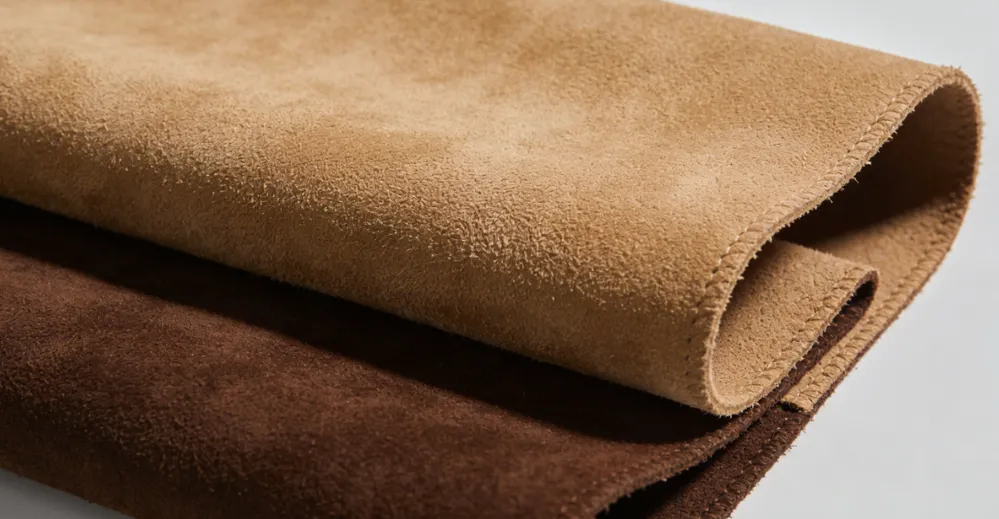
Suede leather is a material made by polishing the inner layer of leather to create a pile effect. Its core characteristics lie in its unique velvet texture and matte aesthetic. It is lightweight and soft to the touch, visually presenting a retro and laid-back high-end feel, and is highly favored by fashion enthusiasts.
However, Suede Leather is not perfect. Due to the dense and absorbent nature of its surface fur, it has obvious deficiencies in stain resistance and wear resistance. Therefore, it is not suitable for manufacturing everyday commuting durable products.
Suede leather is an ideal choice for creating high-end and fashionable handbags. If you are considering creating your own brand, choosing suede as the material will enhance the grade of your bags.
This post will explore the characteristics of Suede Leather and its applicability in bag manufacturing.
- What Is Suede Leather?
- What Is Suede Leather Made Of?
- Is Suede Leather Waterproof?
- Why Is Suede Not Waterproof?
- Can Suede Leather Be Made Waterproof?
- What Happens When Suede Leather Comes into Contact with Water?
- What Should Be Done if Suede Leather Gets Wet?
- What to Do If Suede Leather Gets Wet
- Suede vs. Other Leathers for Water Resistance
- Best Practices
- Synthetic Suede Leather: Waterproof
- Practical Suggestions for Your Bag Business
- Is Suede Leather Durable?
- Is Suede Leather Good for Making Bags?
- Conclusion
What Is Suede Leather?
Suede leather is a type of leather made from the inner part (i.e. the flesh side) of animal skins, with a velvety texture. It is usually derived from the skins of cows, pigs, sheep, goats, or deer, and the most common material is cowhide. Unlike full-grain leather (which has a smooth outer texture), suede leather is created by dividing the leather and polishing or buffing the inner fibrous layer, resulting in a texture similar to velvet.
Suede leather is not a specific type of animal leather, but rather a leather processing technique. Due to its rich texture and fashionable appearance, it is often used to make shoes, jackets, bags, and accessories.
Raw Materials and Structure
Source: Made from the inner layer (the side with the flesh) of animal skins (such as cowhide, sheepskin, deer skin, pigskin, etc.). Traditionally, mink skin (the skin of small Asian deer) might have been used, but as the mink species is an endangered one, modern suede leather mostly uses other animal skins as substitutes.
Structure: Unlike full-grain leather (using the outer skin layer), suede leather is formed by removing the outer skin layer, exposing the fiber layer, and then through polishing, creating a suede surface. It has no protective coating on the surface and presents a delicate velvet-like texture.
Key Characteristics
| Feature | Description |
| Softness | Extremely soft and pliable; pleasant to touch |
| Appearance | Matte, fuzzy surface with a nap that changes shade when brushed in different directions |
| Durability | Less durable than full-grain leather; prone to scratching, staining, and water damage |
| Breathability | Good breathability, making it comfortable for shoes and clothing |
Suede vs. Nubuck: The Common Confusion
| Feature | Suede (Reverse Suede) | Nubuck (Positive Suede) |
| Origin | Made from the inner split (flesh side) of the hide. | Made from the outer grain (top side) of the hide. |
| Texture | Softer, fuzzier, and has a longer “nap” (pile). | Finer, velvety, and has a very short, tight nap. |
| Durability | More delicate; prone to tearing and wear. | Much tougher and more durable (since it’s the top layer). |
| Price | Generally more affordable. | Generally more expensive (requires high-quality top-grain). |
Quick Tip: If you see a leather that looks like suede but feels tougher and has a very fine, short fuzz (like a peach skin), it is likely Nubuck.
Types of Suede
| Type | Source | Characteristics |
| Cow suede | Cattle hide split | Most common; durable, affordable; used for shoes, jackets |
| Lamb suede | Sheep skin | Ultra-soft, lightweight, delicate; premium garments and gloves |
| Goat suede | Goat skin | Fine grain, supple, more durable than lamb; high-end accessories |
| Pig suede | Pig skin | Coarse texture, very durable, breathable; work gloves, linings |
| Deer suede | Deer or elk | Exceptionally soft, stretchy; Native American craft tradition |
Advantages and Disadvantages of Suede Leather
Advantages
- Excellent breathability: The fiber structure allows for air circulation, making it suitable for making close-fitting clothing or footwear.
- High-quality touch: The suede texture gives the product a luxurious feel, often used in high-end clothing, shoes, bags and home decorations.
Disadvantages
- Easy to absorb moisture: The gaps in the fibers are large, and they easily absorb water, causing deformation or staining.
- Not resistant to dirt: The fibers are prone to adsorbing dust and stains, and cleaning requires professional tools (such as a plush surface brush).
- Less durable: Compared to full-grain leather, plush leather is more prone to wear and tear and requires regular maintenance.
Summary of the Advantages and Disadvantages
| Advantages | Disadvantages |
| Exceptionally soft and tactile | Stains easily; difficult to clean |
| Lightweight and flexible | Loses shape if not supported |
| Breathable and comfortable | Fades with sun exposure |
| Rich, matte color absorption | Requires regular maintenance |
| More affordable than full-grain | Less durable; shows wear quickly |
The Uses of Suede Leather:
- Fashion field: Jackets, bags, skirts, gloves, scarves, etc.
- Footwear: Casual shoes, boots (such as Chelsea boots).
- Home: Sofas, throw pillows, car interiors (such as steering wheel covers).
What Is Suede Leather Made Of?
Suede leather is made from the inner side (i.e. the flesh side) of animal skins, not from a separate individual animal. Its most common raw material sources are cattle, sheep, goats and deer.
Main Materials
Suede leather is made from the fur of various animals. Its most common sources of raw materials are:
- Cowhide (widely used due to its availability and durability)
- Sheepskin (softer and more delicate, often used in high-end fashion products)
- Sheepskin-like material (similar to sheepskin but slightly thicker)
- Goatskin (has durability and elasticity, used in jackets and accessories)
- Pigskin (rare, but used in some budget-friendly imitation suede products)
Historical Note: The term “suede” originally referred to gloves made from the fur of Swedish reindeer or caribou (in French, “gants de Suede”), but modern suede rarely uses deer fur due to considerations for animal protection.
The Production Process of Suede Leather
To produce suede leather, several steps are required to transform raw hides into a textured leather with a unique soft texture:
Step 1: Splitting the Hide
The animal hide is thick and composed of multiple layers. The outer layer (the textured surface) is tough and waterproof, while the inner layer (the flesh surface) is softer and more porous.
The hide is split into two layers:
- Top-grade leather (the outer layer, used for durable products such as belts or furniture).
- Split leather (the inner layer, used for suede or bonded leather).
Step 2: Polishing or Buffing
The split leather will be polished or buffed to enhance the protrusion of the flesh fibers, thereby creating a fine, soft suede effect.
This process can remove flaws and give the suede leather its characteristic soft texture.
Step 3: Coloring (Optional)
Some suede leathers may undergo coloring, waterproof spray, or other treatments to enhance color, durability, or stain resistance.
However, excessive treatment may reduce the natural breathability and softness of the suede leather.
Summary of How Suede is Made
| Step | Description |
| 1. Split the hide | A thick animal hide is split horizontally into two layers: the top grain (smooth outer layer) and the split (inner layer). |
| 2. Buff the split | The split (flesh side) is sanded or buffed with abrasive rollers to raise the fibers, creating a soft, velvety nap. |
| 3. Dye and finish | The napped surface is then dyed and sometimes treated with waterproofing sprays or conditioners. |
Common Animal Sources
| Animal | Characteristics of Suede |
| Cow | Most common; durable, thicker, suitable for bags and shoes. |
| Sheep / Lamb | Extremely soft, fine nap; used for high-end gloves, jackets, and delicate accessories. |
| Goat | Very soft and flexible, often used for gloves and small leather goods. |
| Deer | Soft but tough; used for casual jackets and bags. |
Environmental and Ethical Considerations
- Animal Welfare: The use of animal skins in genuine sheepskin products has raised ethical concerns among some consumers.
- Sustainability: Leather production has an impact on the environment (such as water usage, chemical tanning processes), but sheepskin fleece products made from by-products of the meat industry may be more sustainable than synthetic alternatives (synthetic products may involve plastic pollution).
- Vegan Options: Artificial sheepskin is an animal-free alternative, but its production still involves environmental trade-offs.
Synthetic Suede (Faux Suede)
In the textile industry, “velvet” usually refers to a specially designed microfiber fabric that has an appearance and texture similar to that of real velvet, but without using animal products.
Materials: These are typically made from a blend of polyester or polyamide (nylon).
Construction:
Microfibers: Manufacturers use ultra-fine fibers (usually in an “island-like” or “orange peel” segmented structure) to simulate the density of animal skin.
Process: The fabric is made through weaving, knitting, or non-woven methods, and then undergoes chemical treatment (such as solvent treatment) and polishing to form a fluffy texture.
Advantages: Synthetic velvet (often referred to as super velvet or alcantara in high-end applications) is more uniform, more durable, more waterproof, and easier to clean than real velvet.
Comparison: Natural vs. Synthetic Suede
| Feature | Natural Suede (Leather) | Synthetic Suede (Fabric) |
| Primary Material | Animal hide (Lamb, Goat, Pig) | Polyester / Polyamide (Plastic-based) |
| Texture | Irregular, warm, distinct grain | Uniform, consistent, cooler to touch |
| Breathability | High (natural pores) | Low to Medium |
| Water Reaction | Absorbs water easily; stains/warps | Often water-resistant; dries quickly |
| Durability | Delicate; prone to tearing | High abrasion resistance |
| Maintenance | High (needs brushing/sprays) | Low (often machine washable) |
Quality Grades of Suede
| Grade | Source | Characteristics |
| Premium | Lambskin, Calfskin, Deer(full thickness, not always split) | Very soft, fine nap, lightweight, luxurious. |
| Standard | Cowhide Split (most common) | Denser, more robust nap, affordable. |
| Low | Pigskin Split, Bonded Leather | Stiff, coarse nap, poor durability. |
Is Suede Leather Waterproof?
No, suede leather is not waterproof. In fact, it has a high water absorption capacity and is prone to being damaged by water.
Why Is Suede Not Waterproof?
Suede leather is made from the inner side of animal skins (the meaty part), which is then polished to create a soft, fuzzy surface.
The curly fibers can easily absorb water, oil, and other liquids like a sponge.
When water penetrates the leather, it may leave permanent stains, make the leather hard, and even form water rings.
Can Suede Leather Be Made Waterproof?
Before your first use, you can apply a waterproof spray specifically for suede (usually silicone-based or fluorocarbon-based) to the surface. This will create a protective layer on the surface, giving it a waterproof and moisture-proof effect, but it is not completely waterproof.
This protective measure is temporary and needs to be reapplied regularly, especially after frequent use or cleaning.
What Happens When Suede Leather Comes into Contact with Water?
- Dyeing: Water is absorbed immediately and usually leaves dark spots or “water rings”, which are difficult to remove.
- Damage: Excessive moisture can cause the leather to harden, deform or shrink. It will return to its original state after drying.
- Oil absorption: It is also prone to absorbing oil, which may permanently stain the material.
What Should Be Done if Suede Leather Gets Wet?
Immediately wipe it with a dry, absorbent cloth (do not rub).
Let it air dry naturally, away from heat sources (do not use a hair dryer or heating equipment).
After it is completely dry, gently brush the fur with a suede brush to restore its original texture.
What to Do If Suede Leather Gets Wet
| Step | Action |
| 1. Blot immediately | Use a clean, dry cloth; do not rub |
| 2. Stuff with paper | Maintain shape while drying |
| 3. Air dry naturally | Away from heat sources (no hairdryer, radiator, or sun) |
| 4. Restore the nap | Once fully dry, brush gently with a suede brush |
| 5. Use suede eraser | For water stains after drying |
Suede vs. Other Leathers for Water Resistance
| Leather Type | Water Resistance | Why |
| Full-grain leather | Good | Natural oils, dense grain, can be waxed |
| Nubuck | Slightly better than suede | Sanded grain retains some density |
| Suede | Poor | Open fibers absorb moisture readily |
| Oil-tanned leather | Excellent | Impregnated with oils; repels water |
| Synthetic suede (microsuede) | Better | Polyester/nylon fibers resist absorption |
Best Practices
| Do | Don’t |
| Apply protective spray before first wear | Wear in rain without protection |
| Reapply spray every few weeks | Store damp suede in enclosed spaces |
| Use a suede brush regularly | Rub wet suede aggressively |
| Seek professional cleaning for serious water damage | Use leather oils or waxes (clogs pores) |
Synthetic Suede Leather: Waterproof
If “suede” is mentioned in furniture decoration, car interiors, or certain modern footwear scenarios, it is likely to be synthetic suede (a microfiber material).
Properties: Synthetic suede (made from polyester or polyamide) is usually treated to have waterproof or even waterproof and moisture-resistant properties.
Durability: Unlike natural suede, the synthetic version usually dries quickly and is less prone to being stained by water, but it can still be damaged by oil.
Practical Suggestions for Your Bag Business
If you are designing bags with suede leather material:
- Appropriate application: Use suede material in low-risk areas – such as the interior lining, small decorative panels, or bags designed for dry weather and occasional use. Do not use it on the exterior of bags intended to be daily practical tools, travel bags, or those used in areas with frequent rainfall.
- Pre-treatment and education: Before selling, ensure that the suede material is treated with a protective spray. Provide a maintenance card that clearly informs customers of its water sensitivity and guides them on how to reapply the protective spray.
- Manage expectations: Highlight the aesthetic and tactile qualities of the suede material rather than its durability or practicality. This can manage customer expectations and reduce the return rate.
Is Suede Leather Durable?
The durability of suede leather is moderate, but it is not as durable as full-grain or top-grain leather. Its durability largely depends on how it is used and how well it is maintained.
Why Is Natural Suede Leather Not Very Durable?
Suede leather is made from the layered part inside the leather (the soft inner layer). It lacks the dense protective “texture” layer found on smooth leather.
- Wear and scratches: Due to the raised “hairs” (fuzzy fibers) on the surface, it is easily scratched on rough surfaces. It wears out faster than smooth leather.
- Tear: The internal layered structure is more fragile than the top texture layer. If subjected to high tension or sharp pulling, suede is more likely to tear.
- Water and stains: As previously discussed, suede absorbs water and oil immediately. This can lead to permanent staining, hardening or deformation, significantly shortening the lifespan of the item.
- Fading: Its porous surface absorbs ultraviolet rays, causing colors to fade faster than coated leather. If exposed to direct sunlight for a long time.
Durability Breakdown: Key Weaknesses
| Weakness | Why It Happens | Consequence for Bags |
| Poor Abrasion Resistance | The raised nap is easily worn down, flattened, or scuffed. | Edges, corners, and straps will show wear quickly, looking “bald” or shiny. |
| Stains & Water Damage | The porous, fibrous surface absorbs liquids and oils like a sponge. | Watermarks and oil stains are often permanent. Cleaning is difficult. |
| Tear Strength | The split layer lacks the dense fiber structure of top-grain leather. | More prone to snagging and tearing if caught on sharp objects. |
| Color Transfer | The nap readily picks up dye from other materials. | Rubbing against dark denim can permanently stain light-colored suede. |
Key Factors Affecting Suede Durability
| Aspect | Performance |
| Abrasion resistance | Moderate – the soft nap can flatten, scuff, or wear thin over time, especially on high friction areas (e.g., elbows, bag corners). |
| Tear strength | Lower than full grain leather – the buffed fibers are less tightly bound. |
| Stain resistance | Poor – absorbs liquids and oils easily, leading to permanent marks. |
| Water resistance | Poor – water can stiffen or discolor the material. |
| Longevity with care | Can last several years (e.g., 3–10 years) if regularly brushed, protected with spray, and kept dry. |
Comparison: Suede vs. Other Leathers
| Material | Durability Rating | Key Characteristics |
| Full-Grain Leather | High | The toughest leather. Resistant to moisture, scuffs, and tearing. Develops a patina over time. |
| Nubuck | Medium-High | Made from the tough outer grain (like full-grain) but sanded. More durable than suede but still shows scratches. |
| Natural Suede | Medium-Low | Soft and flexible but prone to staining, scuffing, and tearing. Requires careful handling. |
| Synthetic Suede | High | Made from polyester/nylon. Highly resistant to fading, staining, and abrasion. Often outlasts natural suede. |
Durability by Application
| Use Case | Suitability | Expected Lifespan |
| Fashion jacket | Good | 5–10 years with care |
| Shoes (casual) | Moderate | 2–5 years; heels and soles wear first |
| Gloves | Good | 3–7 years; palms wear thin |
| Bags and purses | Moderate | 3–5 years; corners and base scuff |
| Upholstery | Moderate | 5–8 years; high friction areas flatten |
| Work gloves (pig suede) | Very Good | 5–10 years; toughest suede application |
How to Maximize Durability?
If you want your suede products to last for a long time:
- Spraying: Use a waterproof spray without silicone oil immediately after purchase.
- Wiping: Use a suede brush to lift the fur and remove dirt to prevent it from getting stuck in the fibers.
- Replacement: Do not wear suede shoes for two consecutive days; allow the fibers to dry and return to their original state.
How to Maximize Suede Durability
| Practice | Effect |
| Regular brushing | Restores nap, prevents matting and permanent flattening |
| Protective spray | Repels water and stains before they penetrate fibers |
| Rotation | Avoid wearing the same suede item daily; allows recovery |
| Proper storage | Use breathable bags, stuff shoes with paper, avoid plastic |
| Prompt cleaning | Address stains immediately before they set |
| Professional cleaning | Annual deep clean for high-value items |
When Suede Fails
| Damage Type | Cause | Repairable? |
| Water stains | Rain, spills | Difficult; often permanent |
| Oil stains | Skin oils, food | Very difficult; usually permanent |
| Scuffs and abrasions | Friction, contact | Moderate; suede eraser or brush may help |
| Tears or holes | Sharp objects, stress | Possible with leather patch; visible |
| Nap wear (bald spots) | High-friction use | Irreversible; indicates end of life |
Strategic Application in Bag Design
Given the fragility of its material, suede leather should be appropriately utilized in the design:
Best application scenarios (lower risk):
- Interior lining: It can enhance the luxurious feel and has a very low degree of wear.
- Decorative accents: As panels or decorative strips in non-contact areas.
- Evening/Handbag: Suitable for occasional and light usage.
Avoided application scenarios (higher risk):
- Bag bottom, handle or shoulder strap: Any areas with high contact and high wear.
- Daily commuting bag, backpack or travel bag: Will be damaged quickly.
- Outdoor or rainproof equipment: Offers no protection at all.
Is Suede Leather Good for Making Bags?
Yes. Suede has a soft, smooth texture and a casual yet luxurious appearance. It is particularly suitable for handbags, backpacks, loose shoulder bags and fashionable items, as its texture is elegant and its touch is premium.
The Advantages of Making Bags with Suede Leather
- Extremely soft: Made with an inner layer of animal skin, it has a smooth and delicate texture like velvet, with a gentle and unique style.
- Light and versatile: It is usually lighter in weight than traditional leather, providing the brand with a wide range of styling options.
- Bright colors: With excellent dyeing performance, it can present rich, deep and high-end colors, being highly visually appealing.
Summary of the Advantages
| Advantage | Detail |
| Luxurious feel | Soft, velvety texture — instantly premium-looking |
| Unique aesthetic | Matte finish, rich color depth (especially navy, burgundy, camel) |
| Lightweight | Often lighter than full-grain leather |
| Drapes beautifully | Great for slouchy/soft-structure bags |
The Disadvantages of Making Bags with Suede Leather
- Not durable: Derived from the second layer of animal skin, it has low strength and is prone to wear and fading due to daily friction, especially at the edges. Its tear resistance is also low.
- Sensitive to liquids: It easily absorbs water and gets stained. Raindrops, beverages, or oil stains from hands can leave permanent stains that are difficult to completely remove.
- Complex to care for: Without coating protection, cleaning is difficult and requires special tools and patience. Improper handling can easily damage the leather surface.
- Shorter lifespan: Its delicate nature determines that its lifespan is shorter under daily use (about 3-5 years), which is shorter than similar leather products (such as cowhide, which can last 10-30 years).
Summary of the Disadvantages
| Disadvantage | Detail |
| Stains easily | Water, oil, grease — all leave marks |
| Hard to clean | Can’t just wipe with a cloth |
| Scratches visibly | Nap direction changes = obvious marks |
| Low durability | Pilling and wear over time |
| Rain = disaster | No water resistance |
Suede vs. Smooth Leather for Bags
| Feature | Suede Leather | Smooth Leather (e.g., Calfskin/Cowhide) |
| Durability | Low (Prone to stains & scuffs) | High (Resists scratches & moisture) |
| Texture | Soft, velvety, matte finish | Smooth, sleek, often has a sheen |
| Maintenance | High (Needs regular brushing & sprays) | Low (Easy to wipe clean) |
| Best For | Fashion statements, dry weather, casual looks | Everyday use, work bags, all-weather practicality |
Suede vs. Other Leathers for Bags
| Feature | Suede | Goatskin | Lambskin | Hybrid/Coated |
| Durability | ⭐ (Very Low) | ⭐⭐⭐⭐⭐ (High) | ⭐⭐ (Low) | ⭐⭐⭐ (Medium) |
| Water/Stain | Poor (Ruinous) | Good (Resilient) | Poor (Marks Easily) | Excellent (Coated) |
| Maintenance | Very High (Specialist) | Low (Easy) | High (Babying) | Very Low (Wipeable) |
| Best For | Evening/Decorative Bags | Everyday Workhorse Bags | Luxury/Collector Bags | Commuter/Beater Bags |
Who Should Purchase a Suede Leather Bag?
- Fashion enthusiasts: You prioritize style and texture above all else, regarding the bag as an accessory rather than a practical tool.
- Occasional users: You need a bag that can be used when going out in dry weather, attending a dinner party, or participating in activities that won’t experience severe impacts or be placed on the ground.
- Careful keepers: You are willing to invest time and money in pre-treatment sprays and will carefully store it (put it in a dust bag).
Purchase and Usage Suggestions
- Opt for genuine cowhide leather: Cowhide leather with a suede finish is usually more durable and offers a balance of softness and shape retention. It is a more worthwhile investment compared to sheepskin suede.
- Preventive Maintenance: After purchase, prioritize using a professional waterproof spray for pre-treatment. Stains like ink or oil cannot be removed, while vinegar or alcohol can clean water stains. The care process requires patience.
- Distinguish “Real” Leather: Pay attention to the distinction. Some merchants may use low-cost artificial leather with a “suede-effect” to imitate genuine leather.
Conclusion
The greatest charm of suede leather lies in the dual enjoyment of its visual and tactile sensations. The fine and uniform fur on its surface can soften the light, presenting a low-key and luxurious matte effect, carrying a retro, lazy and relaxed sophistication. It is highly suitable for making luxury handbags, jackets and shoes, instantly enhancing the texture and layering of the outfit.
Choosing suede means choosing a refined lifestyle that sacrifices some durability for aesthetics and touch. It is suitable for fashion enthusiasts who pursue a unique retro style and are willing to carefully care for their items during daily use. Suede is not suitable as a “battle bag” for daily commuting or outdoor equipment.
If you are considering creating your own high-end luxury bag brand, we welcome you to cooperate with us and work together to strive for your brand.